
Clipping Path in Illustrator helps you hide unwanted parts of an image or shape with precision. This guide explains what it is, why designers use it, and how to create it step by step. You’ll also learn real-world workflows, common mistakes, and time-saving techniques used by professionals.
What Is a Clipping Path in Illustrator?
Clipping Path in Illustrator is a vector-based method that controls visibility. A path acts like a mask, showing only the selected area while hiding everything outside it.
Unlike raster masking, clipping paths rely on clean vector edges, which makes them ideal for sharp product images and scalable designs.
Designers use clipping paths for product images, background removal, and creative layouts. It works best with clean shapes and sharp edges.
Why Use Clipping Path in Illustrator?
Clipping paths illustrator workflows give control over how graphics appear. Many professionals rely on this feature for precise editing tasks.
Key benefits:
- Clean image cutouts for e-Commerce products
- Non-destructive editing
- Better control over shapes and layers
- Works perfectly with vector graphics
For example, product editors working with online stores often process hundreds of images daily. A proper clipping path workflow can reduce editing time by up to 30% while maintaining consistent output.
How to Create a Clipping Path in Illustrator (Step-by-Step)
Step 1: Open Your File
Start Adobe Illustrator and load your image or artwork.
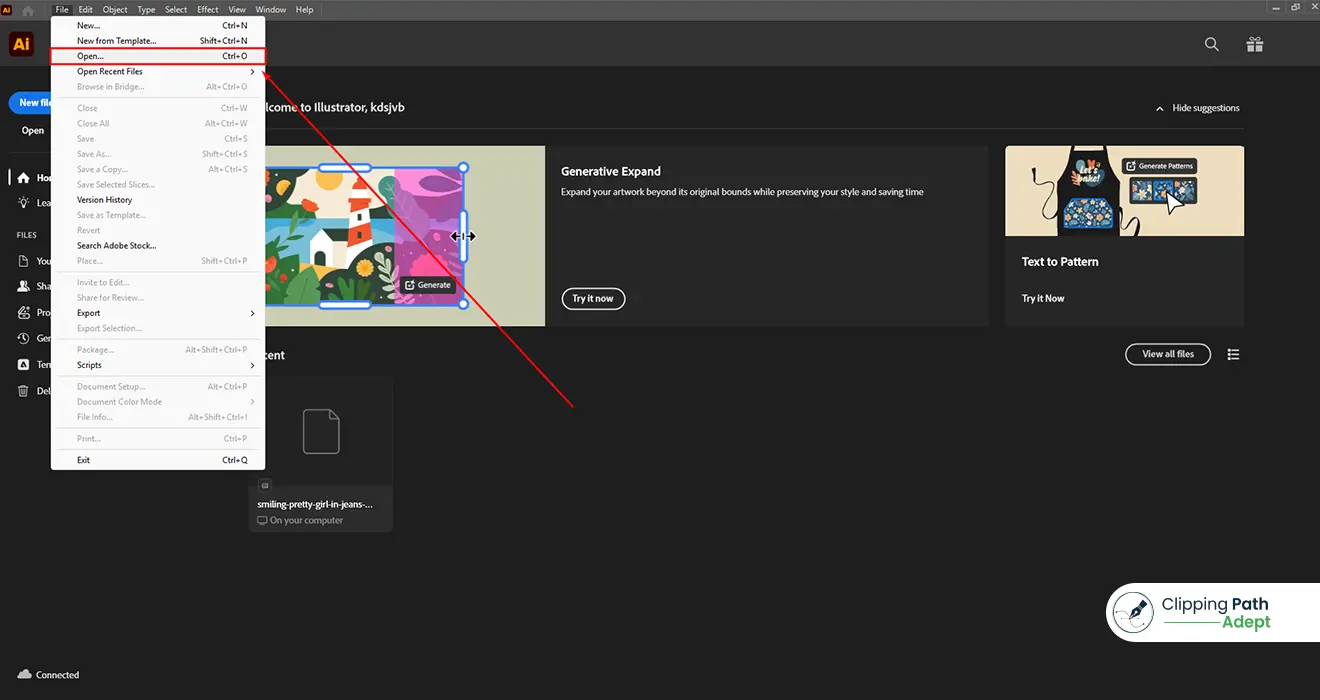
Select your preferred image
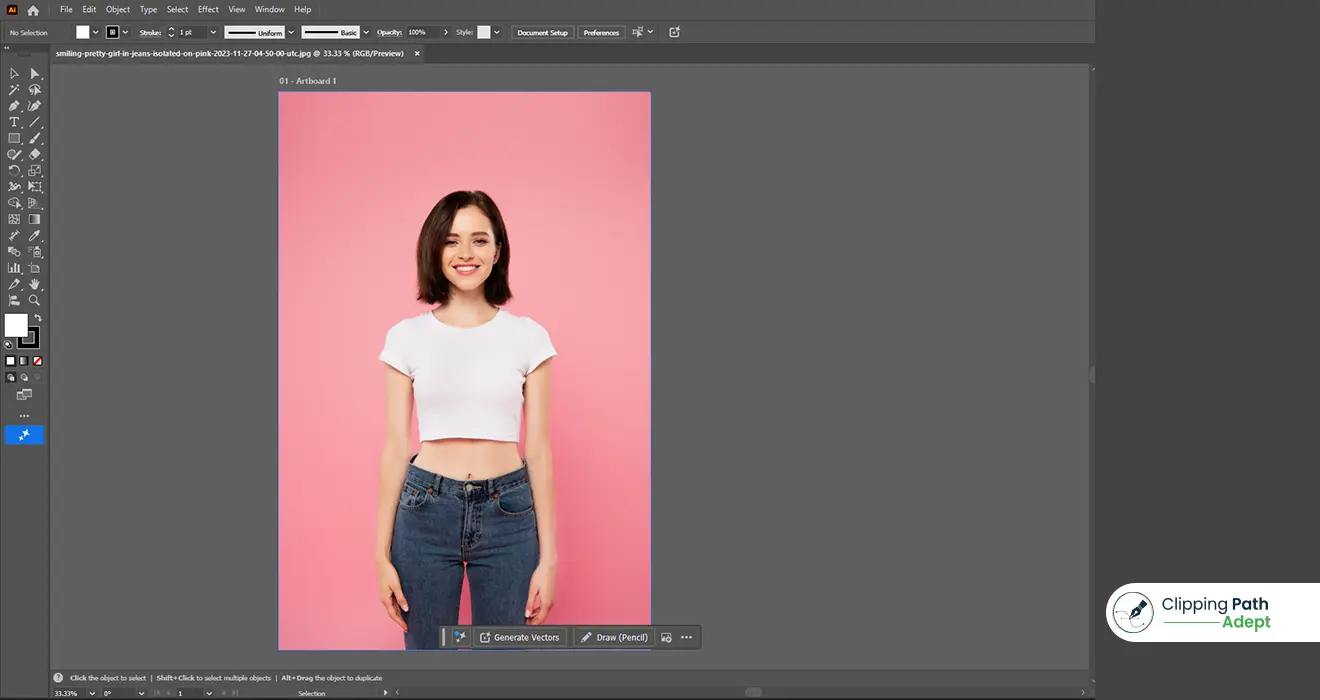
Step 2: Draw a Path Around the Object
Select the Pen Tool (P) and carefully trace around the subject.
Keep anchor points minimal for smoother edges.
Pro tip: Instead of placing too many points, focus on curve control. Fewer anchor points create cleaner and more professional paths.
Step 3: Select Both Objects
Hold Shift and click both the image and the path.
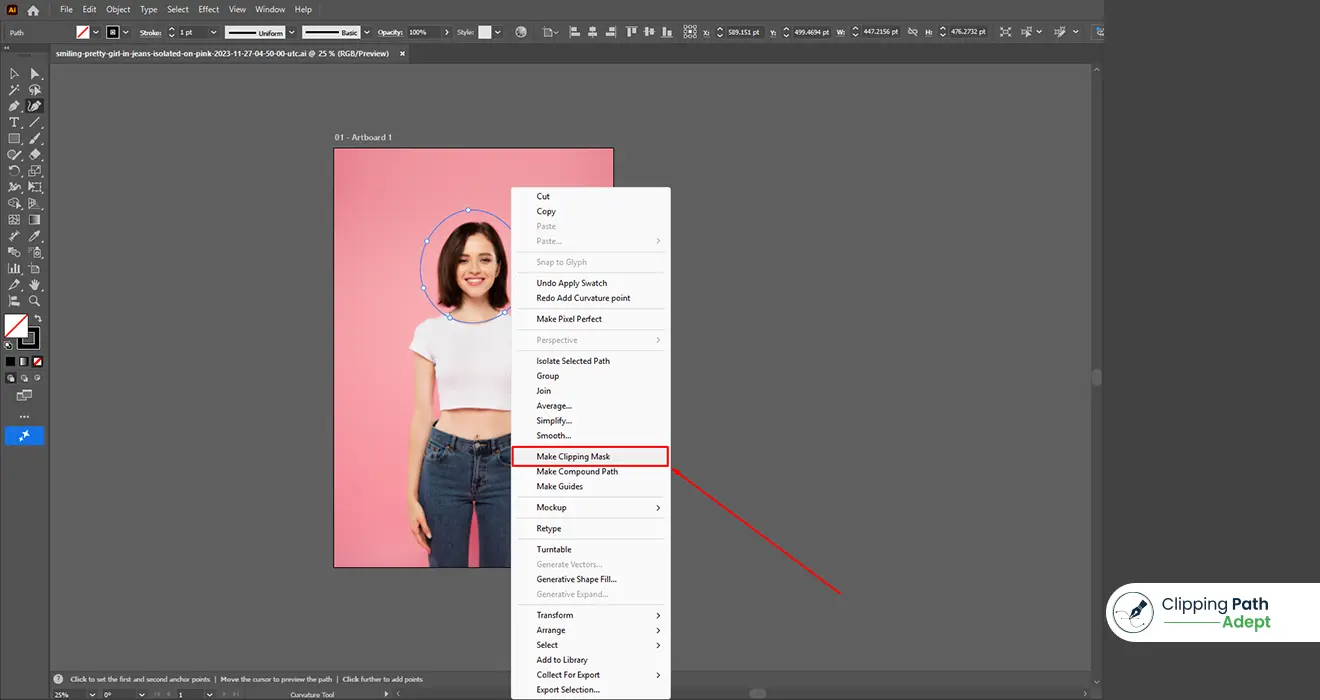
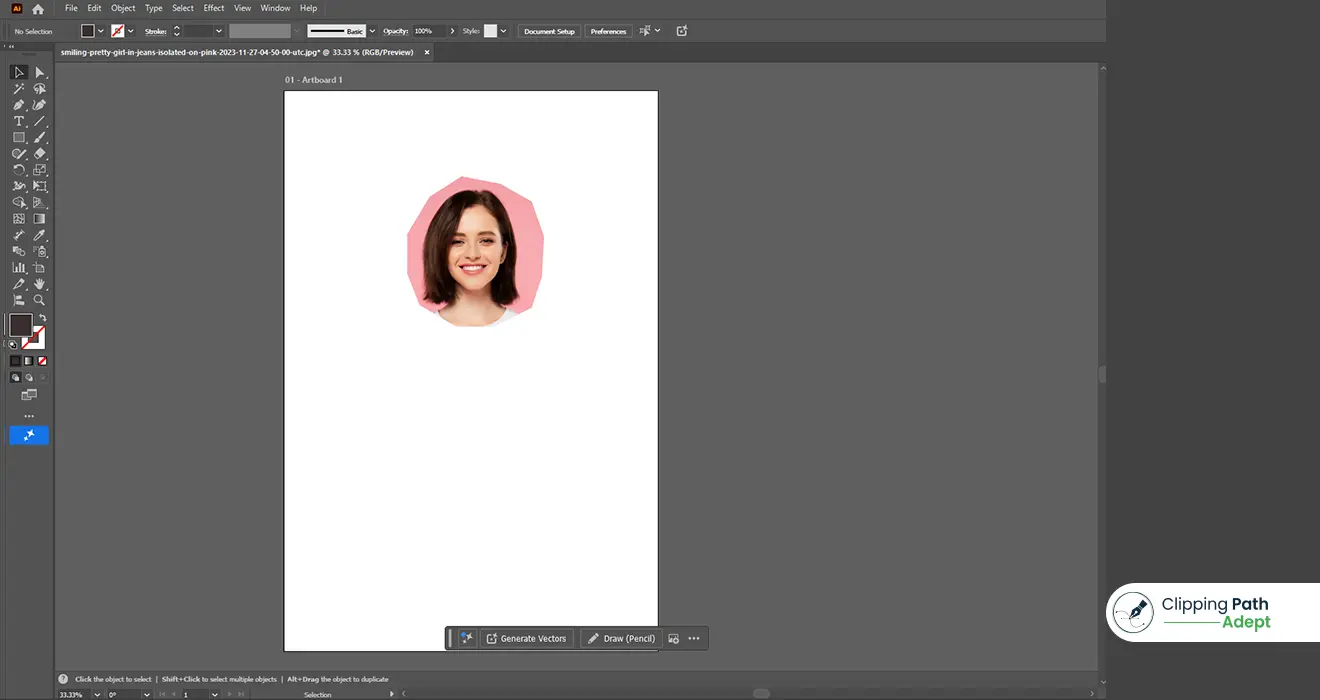
Step 4: Create Clipping Path
Right-click and choose Make Clipping Mask, or go to:
Object > Clipping Mask > Make
Step 5: Adjust if Needed
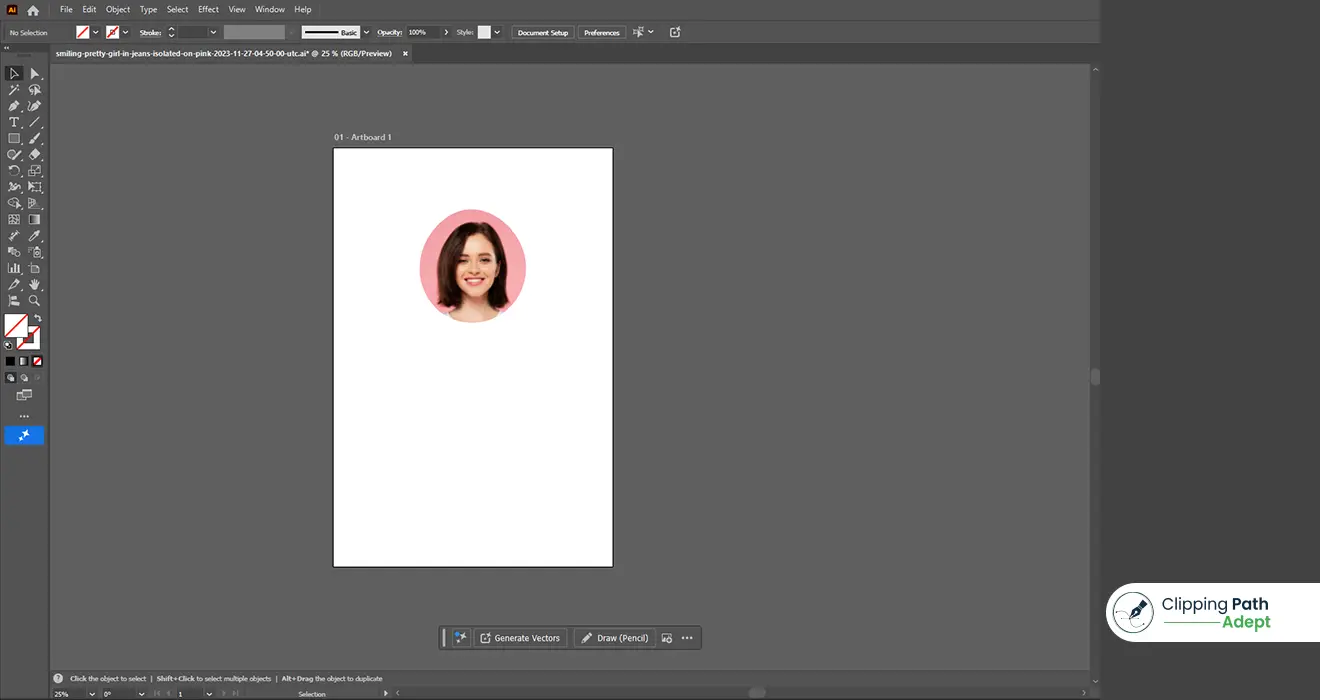
Double-click to enter isolation mode and refine your path.
Zoom to at least 200–300% while refining edges. Small inaccuracies often become visible only after export.
How to Make Clipping Path Illustrator for Multiple Objects?
Clipping path multiple objects illustrator workflows need extra care. Group elements before applying the mask.
Steps:
- Select all objects
- Press Ctrl + G (Group)
- Draw a path over the group
- Apply clipping mask
This method is widely used in banner design and layered compositions where multiple elements must stay aligned within one visible area.
What Is a Compound Clipping Path Illustrator?
Compound clipping path illustrator is useful when dealing with holes or multiple shapes within one path.
Example use case:
- Cutting text out of an image
- Creating layered logo effects
To create:
- Select multiple paths
- Go to Object > Compound Path > Make
- Apply clipping mask
This technique is especially helpful for packaging designs and typography-based visuals where inner cutouts are required.
Common Mistakes While Creating Clipping Path in Illustrator
Many beginners struggle not because of the tool, but because of small technical errors.
- Using too many anchor points → leads to rough edges
- Forgetting to close the path → clipping fails
- Placing the path below the image → mask won’t apply
- Not zooming while editing → hidden imperfections appear later
Fixing these issues early can improve output quality by a noticeable margin, especially in client work.
Pro Tips for Faster Clipping Path Illustrator Workflow
These are practical techniques used by professionals handling bulk image editing.
- Use Outline Mode (Ctrl + Y) to see paths clearly
- Switch to Direct Selection Tool (A) for quick edits
- Start with simple shapes before refining with Pen Tool
- Save a custom workspace for clipping tasks
Combining these habits can cut working time significantly, especially when handling large batches of images.
Clipping Path vs Masking: Which One Should You Use?
Many users confuse these two methods, but each has a specific purpose.
|
Feature |
Clipping Path |
Masking |
|
Best For |
Hard edges |
Soft edges |
|
Use Case |
Products |
Hair, fur |
|
Type |
Vector |
Raster |
Choosing the right method reduces editing time and avoids unnecessary revisions.
Convert Clipping Path to Path Illustrator
Sometimes you may want to reverse clipping.
Steps:
- Select the clipped object
- Go to Object > Clipping Mask > Release
- Edit or delete the path
This is useful when clients request changes after final delivery.
Real Experience: Clipping Path Illustrator in Action
While working with a local clothing business in Europe under Clipping Path Adept Ltd, over 1,000 product images were processed using Illustrator clipping paths.
Switching to compound paths for layered items reduced revision requests by nearly 40%, especially for products with straps and inner gaps.
This shows how the right approach directly impacts efficiency and client satisfaction.
Clipping Path Illustrator for Local Businesses (Europe Focus)
Many agencies around the world rely on Clipping Path Illustrator services for e-commerce.
Common uses:
- Clipping Path
- Background Removal
- Product Photo Editing
- Drop Shadows
- Image Masking
- Color Correction
- Ghost Mannequins
- Car Photo Editing
- Photo Retouching
At Clipping Path Adept Ltd, projects often involve bulk image editing where consistency and accuracy are critical for online stores.
Fast delivery and consistent quality are critical in this market, which makes Illustrator a preferred tool among professionals.
FAQ About Clipping Path in Illustrator
How do I cut part of a path in Illustrator?
Use the Scissors Tool (C) to cut specific sections of a path. Select anchor points and delete unwanted segments.
How do I add a clipping path?
Draw a closed path over your object, select both, then choose Make Clipping Mask.
How to create a cutting path in Illustrator?
Use the Pen Tool to trace your object, then apply a clipping mask.
How do I clip an image to a path in Illustrator?
Place the path above the image, select both, and apply clipping mask.
How to turn an image into a path in Illustrator?
Use Image Trace, then expand the result to convert it into editable paths.
How to remove the clipping path in illustrator?
Select the clipped object, then go to Object > Clipping Mask > Release.
Conclusion
Mastering the clipping path in Illustrator is a total game-changer for creating sharp, professional designs. By sticking to these vector-based techniques, you’ll ensure your product images stay clean, crisp, and perfectly scalable. Whether you’re tackling high-volume e-commerce projects or complex layouts, these workflows are designed to save you time and cut down on tedious revisions. Start applying these tips today to make your creative process smoother and much more efficient.